
Key points for choosing your AI photobooth
- Output quality shapes the participant experience
- Algorithmic non-discrimination is an ethical and legal must
- Processing speed determines whether the activity succeeds
- Regulatory compliance protects organisers and participants
- Creative variety enriches the experience
Output quality, the foundation of the experience
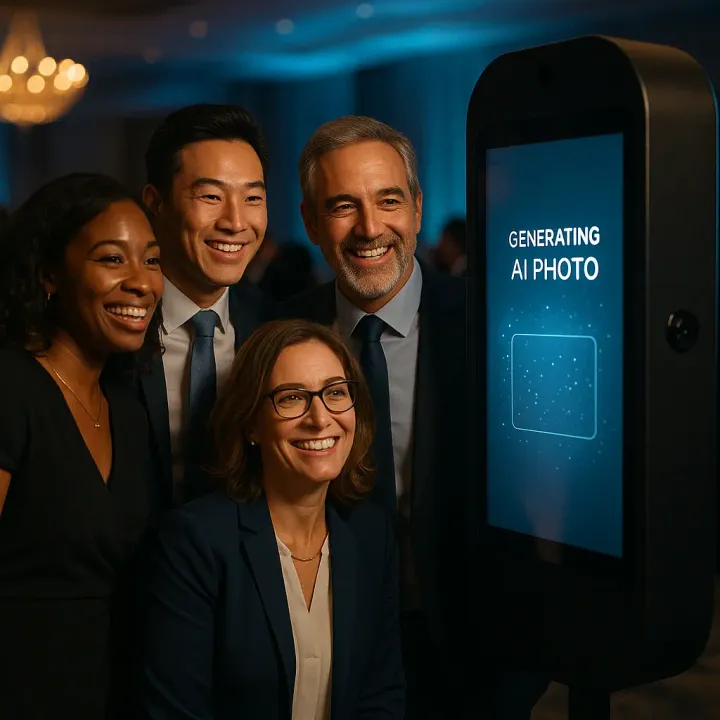
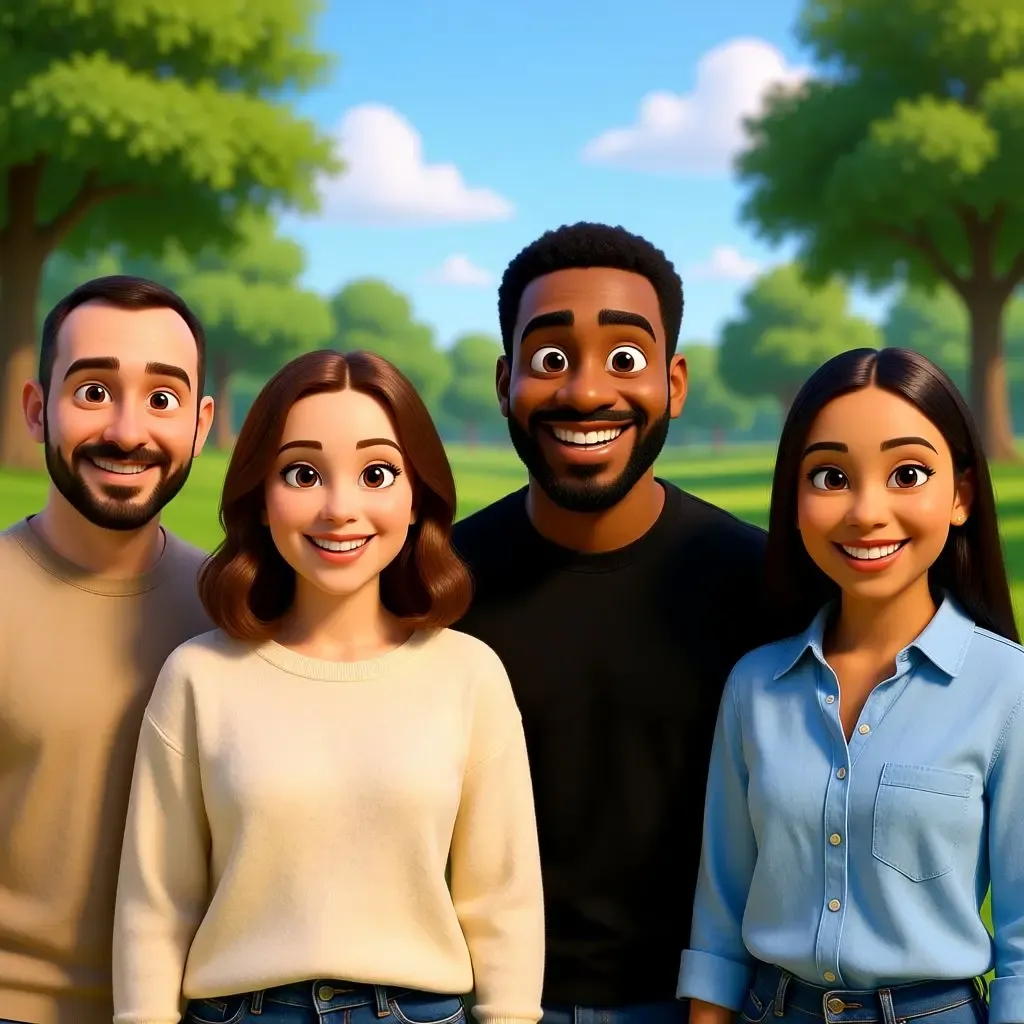
The first requirement is faithful output. A high-performing AI photobooth must preserve the likeness of the people photographed. Unlike face swap technologies, which simply paste faces onto existing bodies, the few advanced systems on the market keep each participant’s visual identity.
This technical distinction matters. It determines user satisfaction. Group photos add a further challenge. The algorithm has to identify and process several faces at once. It also has to keep each person in their original position in the final image.
Keeping the original composition avoids frustration. Nobody wants to end up on the opposite side from their colleagues in the transformed shot. The best systems preserve the spatial layout while applying the creative effects you want.
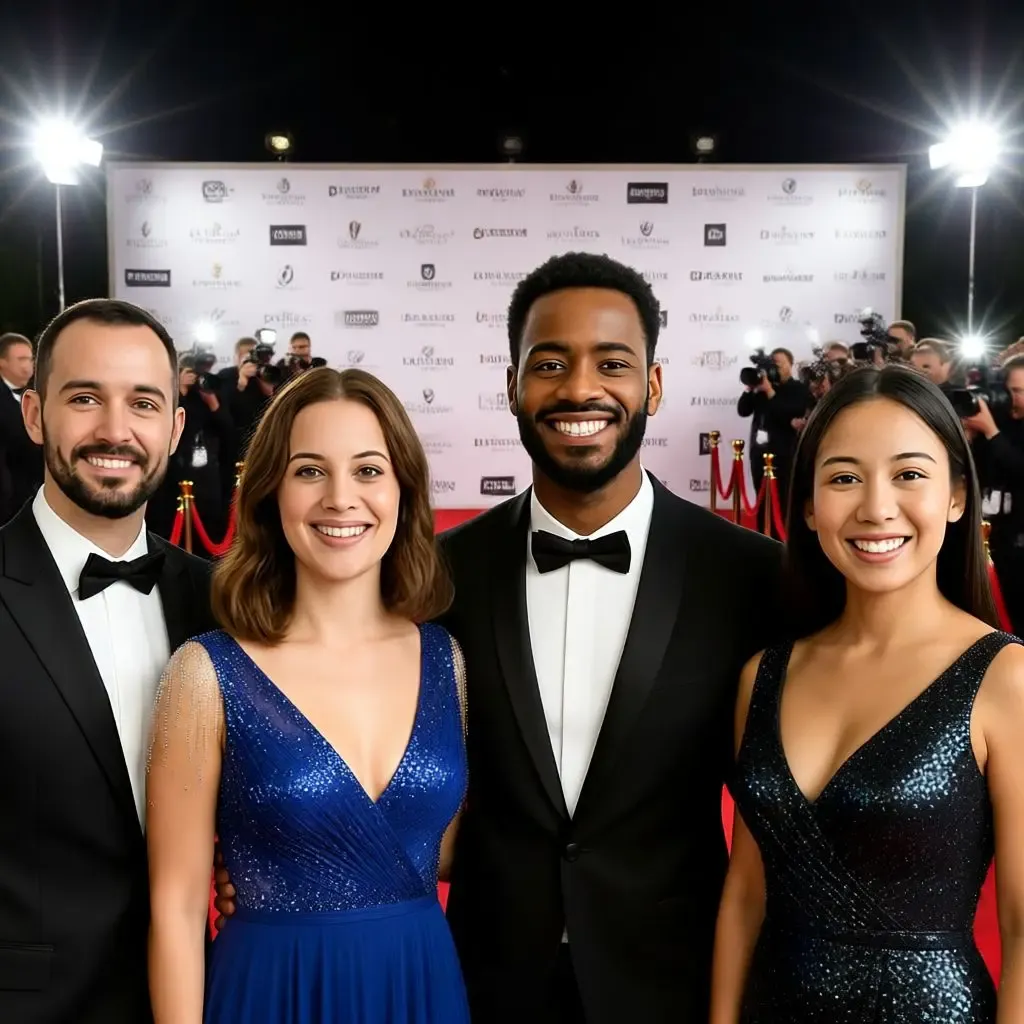
The need for algorithmic non-discrimination
Bias in artificial intelligence systems is a major concern for researchers and regulators. Facial recognition algorithms have shown error rates that vary with people’s ethnic origin or gender. A study by the MIT Media Lab revealed significant disparities in the performance of these technologies.
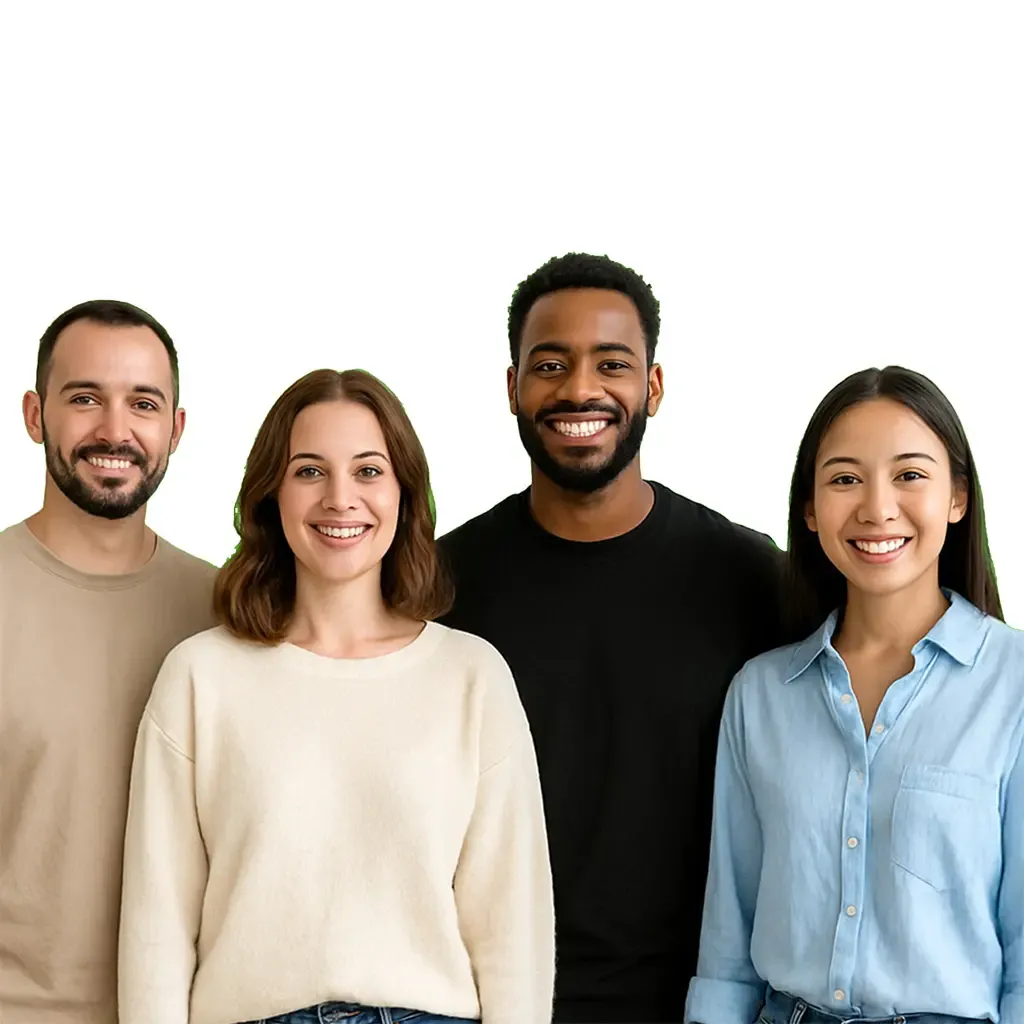
A professional AI photobooth must deliver the same processing quality for everyone. Light and dark skin must be rendered with the same accuracy. Female and male features must be identified without distinction. This requirement is as much about ethics as it is about client satisfaction.
Event organisers are accountable! Offering an activity that discriminated against some participants would be legally unacceptable. Your choice of supplier must take this into account. Serious suppliers are open about the tests they run and the guarantees they provide.
Creative variety, the added value of the activity
An AI photobooth stands out through its range of transformations. The outputs should vary. Renaissance portraits, manga style, a science-fiction look or impressionist paintings: a wide choice of styles enriches the experience.
This variety meets different expectations. Each participant can choose the style that suits them. Groups can take several shots in different styles. The activity becomes more attractive and holds people’s interest for longer.
Tailoring it to the event is a further asset. A corporate seminar will favour professional, elegant outputs. A party evening allows bolder transformations. The flexibility of the system determines how well it fits different settings.
Processing speed, the key to smooth operations
Generation time determines how smoothly the activity runs. A delay of more than a minute between the shot and the print creates queues. The experience suffers. Participants get impatient.
Professional events come with time constraints. Breaks are short. The flow of visitors has to be handled efficiently. A high-performing system completes the whole process (capture, AI generation, printing) in under sixty seconds.
This speed relies on robust technical infrastructure. On-board computing power or connectivity to remote servers determines how fast it runs. Suppliers must guarantee this performance, even when crowds build up. For more on general technical criteria, this guide to photo booth hire offers further pointers.
Regulatory compliance, essential protection
The legal framework has become denser. The General Data Protection Regulation (GDPR) strictly governs the processing of biometric data. Photographs of faces fall into this sensitive category.
An AI photobooth collects and processes facial images. The supplier must inform participants. It must obtain their explicit consent. The data cannot be kept indefinitely. It must be kept secure.
The AI Act, a European regulation coming into force in stages, adds specific requirements for artificial intelligence systems. Biometric recognition systems are under particular scrutiny. Algorithm traceability is becoming mandatory. Suppliers must document their systems.
These constraints are not red tape. They protect individuals. They also make event organisers accountable. Choosing a non-compliant supplier exposes you to penalties. Checking these guarantees is therefore essential before signing any contract.
The Playtime Animations offer: a complete answer
Faced with these many requirements, few suppliers tick every box. Playtime Animations offers an AI photobooth activity that meets each of these essential criteria. Output quality, no discrimination, creative variety, processing speed and regulatory compliance: every point is covered.
This completeness lets organisers focus on their event. The technical and legal side is under control. The activity works. Participants leave happy.
See also: the AI Mobile Photobooth and VideoBooth 360 AI.
Event activities reinvented
The AI photobooth shows how artificial intelligence is reaching unexpected sectors. Event activities are reinventing themselves. Creative possibilities are multiplying.
But this technological innovation calls for vigilance and judgement. Not every system guarantees a quality experience. Not all of them meet ethical and legal requirements. Your choice of supplier determines the success of the activity.
The five criteria set out here for choosing your AI photobooth (quality, non-discrimination, variety, speed, compliance) form a robust evaluation grid. They let you assess the offers on the market objectively. They point you towards reliable, responsible solutions.
Professional events leave no room for approximation. Every detail counts. A well-chosen AI photobooth becomes a highlight. It makes an impression. It keeps the memory of the event alive long after it ends.
FAQ: five questions to help you choose your AI photobooth
What is the difference between an AI photobooth and a classic photobooth?
A classic photobooth captures and prints photos without transforming them. An AI photobooth uses artificial intelligence to generate creative portraits in different artistic styles. The original photo is the starting point for a unique creation, tailored to the chosen style.
Is biometric data kept after the event?
A GDPR-compliant supplier must delete the data after use, unless there is explicit consent for limited retention. Participants must be told how long the data will be processed and for what purpose. Immediate deletion remains the recommended practice for one-off events.
Does the AI photobooth work for all skin types?
Professional-grade systems are trained on diverse datasets. They should deliver equivalent performance regardless of ethnic origin. The supplier should state this guarantee explicitly. If in doubt, ask for demonstrations or references.
How many people can be photographed at once?
Capacity varies from one system to another. High-performing systems handle up to 5 or 6 people in the same photo. Beyond that, quality may drop. For large groups, several successive shots with smaller groups give better results.
How far ahead should I book before the event?
Serious suppliers recommend booking 4 to 6 weeks ahead for major events. This allows time for any customisation of the outputs, technical checks and logistics. For urgent needs, some suppliers can step in at shorter notice, depending on availability.